

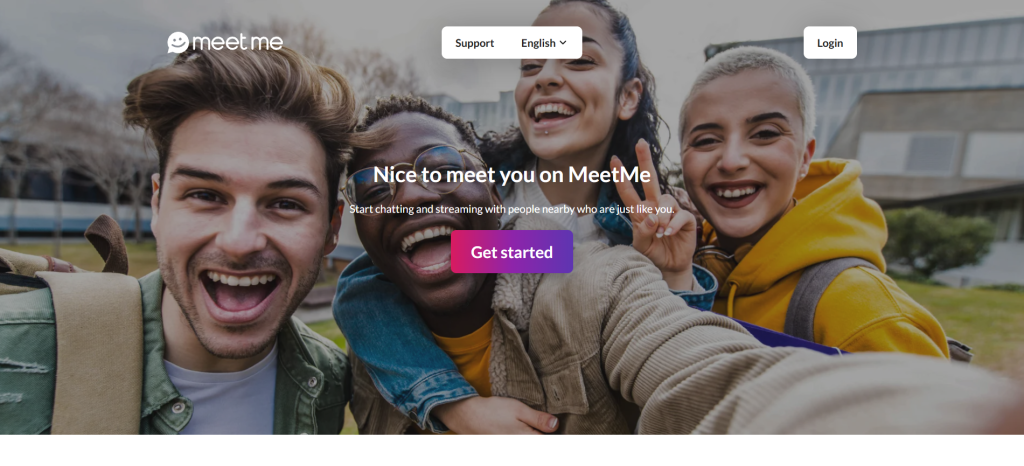
MeetMe Alternative searches usually start when a once-fun social app begins to feel noisy, spammy, or hard to control. MeetMe sits in a specific lane: a blend of social discovery, chatting, and live-style interaction where strangers can connect fast.


That mix is exciting, but it can also attract fake profiles, low-quality messages, and random attention that feels more chaotic than meaningful. A good alternative keeps the “meet new people quickly” vibe, while improving safety tools, match quality, and the overall experience.
Last Updated: February 2026
How this MeetMe Alternative review was evaluated
This MeetMe Alternative review was evaluated using practical criteria that matter in real-world social discovery and chat apps:
- Moderation strength: How harassment, scams, and spam accounts are handled
- Privacy/anonymity controls: Profile visibility settings, block/report tools, and exposure controls
- Pricing transparency: Clear costs for boosts, premium tiers, and paid messaging features
- Ease of use (mobile/desktop): App performance, clean UI, and fast onboarding
- Bot/spam prevention: Verification signals, anti-spam systems, and message filtering
- Filtering options: Location, age range, intent filters, and discovery controls
- Overall user safety: How easy it is to stay in control while meeting strangers
Why people look for a MeetMe Alternative
Most people do not quit social discovery apps because they hate meeting new people. They quit because the quality drops.
Common reasons users search for alternatives include:
- Spam overload (copy-paste intros, suspicious links, and weird “too fast” conversations)
- Low-quality matches that do not match the user’s intent (friends vs dating vs casual chat)
- Weak controls that make it hard to slow down attention or avoid unwanted messages
- Too many fake profiles that waste time and energy
- Pushy monetization (boosts, paywalls, or premium prompts that interrupt normal use)
- Safety concerns around harassment, catfishing, or scams
The real goal is simple: meet people, but keep control.
What users usually want instead (filters, safety, free access)
When people say they want an alternative, they usually mean “the same idea, but better designed.”
What users usually want instead:
- Better filtering to match intent (friends, dating, chatting, local discovery)
- Stronger verification so profiles feel more real
- Cleaner inbox experience with less spam and fewer random requests
- Clear privacy settings that make it easy to control who can message
- A usable free tier that still allows real conversations
- A calmer vibe where it feels possible to build an actual connection
Quick, quotable answer block:
A strong alternative helps people meet faster while feeling safer. Better filters, better moderation, and clearer privacy tools make the biggest difference.
Best options (alternatives list)
These alternatives are grouped by what people usually want from a MeetMe-style experience: local discovery, dating-first matching, social chat, or safer community vibes.
1) Dating-first apps (better match quality)
These are best for people who want fewer random conversations and more intentional matching.
- Tinder (fast discovery, huge user base, simple swiping)
- Bumble (more structure, stronger identity signals, calmer vibe)
- Hinge (more profile depth, better conversation starters)
2) Social discovery + chatting (MeetMe-like energy, cleaner controls)
These can feel closer to “talk to new people fast,” but often with better guardrails.
- Badoo (large user base, discovery tools, strong dating-social hybrid)
- Skout (similar discovery energy; useful when the goal is social chat)
- Tagged (social discovery vibe; best for people who like quick interactions)
3) Community-based apps (safer, slower, more real)
These are best for people who want people-first connections instead of pure “random.”
- Discord communities (interest-based servers, strong moderation if well-run)
- Facebook Groups / local communities (less anonymous, more accountability)
- Reddit communities + niche chat spaces (topic-first connection)
4) Live/social broadcast style (for users who like the live vibe)
These are best for people who enjoy live interaction but want a different culture.
- Yubo (social discovery + live elements, designed around meeting people)
- Live-stream community apps (varies by region; best when moderation is solid)
How to choose quickly:
- Want dating results? Pick a dating-first app
- Want quick social chat? Pick a discovery + chat platform
- Want fewer weird interactions? Pick community-based spaces
- Want live energy? Pick live/social platforms with strong controls
Comparison table
| Platform | Best For | Free Version | Moderation | Key Advantage |
|---|---|---|---|---|
| Tinder | Fast dating discovery | Yes | Medium | Huge user base, quick matching |
| Bumble | More structured dating | Yes | Medium–Stronger | More control and intent signals |
| Hinge | Conversation-first dating | Yes | Medium | Better profile depth and prompts |
| Badoo | Dating + social discovery | Yes | Medium | Strong hybrid of chat + discovery |
| Skout | Social chatting with strangers | Yes | Medium | Quick conversations, broad pool |
| Tagged | Casual social discovery | Yes | Medium | Easy to meet people fast |
| Yubo | Social discovery + live vibe | Yes | Medium | Live-style interaction and social focus |
| Discord communities | Interest-based connections | Yes | Strong (server-based) | Rules + moderators reduce chaos |
Safety differences between alternatives
Not all “meet people” apps treat safety the same way. Some focus on matching and identity, others focus on speed and volume. The difference shows up in how easy it is to stay in control.
Safety differences usually come from:
- Profile verification signals (even small signals reduce catfishing)
- Inbox controls (who can message first, message requests, and filters)
- Blocking/reporting speed (how fast action is taken, not just “a button exists”)
- Discovery design (apps that encourage deeper profiles often reduce spam)
- Community moderation (servers/groups can be safer than public inboxes)
Practical safety habits that work across most apps:
- Avoid moving off-app too quickly (especially within the first few messages)
- Do not share personal contact details early
- Use block/report fast when a conversation feels off
- Keep first meetups public and simple, if meeting offline is ever considered
Quick, quotable answer block:
The safest platforms make it easy to slow things down. If an app pushes fast, low-effort interactions, it usually attracts more spam.
Free vs paid differences (what you get for money)
Most social and dating apps run on a freemium model. The free tier is designed to work, but premium features typically boost speed and visibility.
What free access often includes:
- Creating a profile and browsing people
- Sending limited likes or messages (depending on the app)
- Basic filters like location and age range
- Standard safety tools (block/report)
What paid features often unlock:
- More visibility (boosts, spotlight features, priority placement)
- More control (advanced filters, seeing who liked the profile first)
- More speed (unlimited likes, more daily actions)
- Better sorting (sometimes includes “verified only” or stronger filtering)
A useful rule: premium should help with convenience, not basic safety. If the free version feels unsafe or unusable, it is usually better to switch platforms than to pay.
FAQs on MeetMe Alternative
What does MeetMe Alternative mean?
It means another app that helps people meet new people through chat, discovery, or live-style interaction—often with better filters and stronger safety controls.
Is MeetMe more of a dating app or a social app?
It sits in between. Some people use it for dating, others for casual chat or making friends, which can create mixed expectations.
Which type of alternative is best for real dating?
Dating-first apps usually work best because they are designed around matching intent and profile signals, not just fast chatting.
Which alternative is best for meeting people quickly?
Discovery + chat apps are usually the fastest, but the trade-off can be more spam and lower match quality.
Which alternative is safest overall?
Interest-based communities with active moderators are often safer because behavior is policed more consistently and identity signals are stronger.
Do alternatives have fewer fake profiles?
Some do, especially platforms that use verification signals or have more profile depth. No platform eliminates fake profiles completely.
How can users reduce spam messages?
Use message request filters where available, limit profile visibility, avoid public contact info, and block quickly when messages feel scripted.
Are these apps anonymous?
Most are not truly anonymous. Users can limit what they share, but profiles and activity can still be tracked within the platform.
Is it better to use a community platform instead of a discovery app?
For many people, yes. Communities are slower but often feel more real and less chaotic.
What should a user look for in a good alternative?
Clear privacy tools, strong inbox controls, visible safety features, and an interface that encourages real profiles over quick spam.
Do paid features improve match quality?
Paid features usually improve speed and visibility. Match quality still depends on the user base, filtering tools, and how the platform handles spam.
What is the safest way to move a conversation forward?
Keep it on-platform longer, verify consistency in details, avoid sending personal info, and use video/voice features only when comfortable.
Why do some apps feel more “serious” than others?
Apps with deeper profiles and prompts tend to attract more intentional users, while fast-chat apps attract more casual and spammy behavior.
How quickly should users meet someone offline?
There is no rush. It is better to build comfort, verify identity signals, and meet in a public place only when it feels safe and mutual.
Final verdict: MeetMe Alternative
A good alternative depends on what the user actually wants: fast social chat, real dating outcomes, or safer community connection. Dating-first apps usually improve match quality and reduce chaos. Social discovery apps keep the speed, but the best ones offer stronger filters and cleaner inbox control. Community-based spaces trade randomness for stability, which often feels safer and more genuine. The smartest approach is testing two or three options for a short time, focusing on inbox quality and safety controls, then sticking with the platform that feels the most controllable—which is the real reason people search for a MeetMe Alternative.